
Abatement Technologies Air Duct Cleaning in Lakewood: A Homeowner’s Guide
Most homeowners have no way to tell whether the machine a technician wheels into their home is a HEPA-rated negative air unit or a glorified shop vac with a filter. That difference decides whether contaminated particles stay locked inside the duct system or get pushed back into your living room. Abatement Technologies equipment is the real thing: sealed negative-air and HEPA filtration built for remediation work, not for a quick blow-through. This guide explains what it does, when it’s truly necessary in a Lakewood home, and how to tell it’s actually being used.
What does Abatement Technologies equipment actually do during a duct cleaning?
Abatement Technologies builds negative-air machines and HEPA filtration units for professional mold and contaminant abatement. In a duct cleaning, a negative air machine does one job well: it keeps the inside of the duct system under negative pressure while technicians work. That means air is always being pulled toward the machine and its HEPA filter, not drifting out through register gaps, seams, or the open end of a disconnected run.
Here’s the practical difference it makes:
- The duct cavity stays under negative pressure for the whole cleaning, so dislodged dust and debris move toward the filtration unit instead of into your rooms.
- HEPA filtration captures fine particles that a standard vacuum bag or shop vac filter lets pass.
- Containment stays intact while rotary brushes and air whips agitate the duct interior.
- Air inside the living space isn’t drawn into the duct work zone and re-released elsewhere.
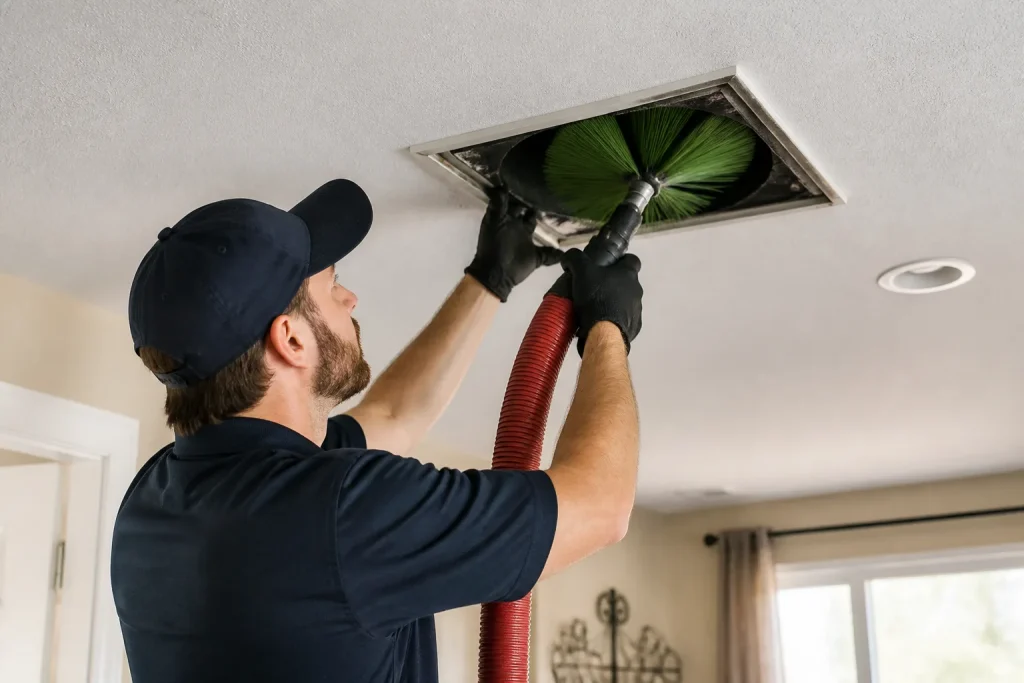
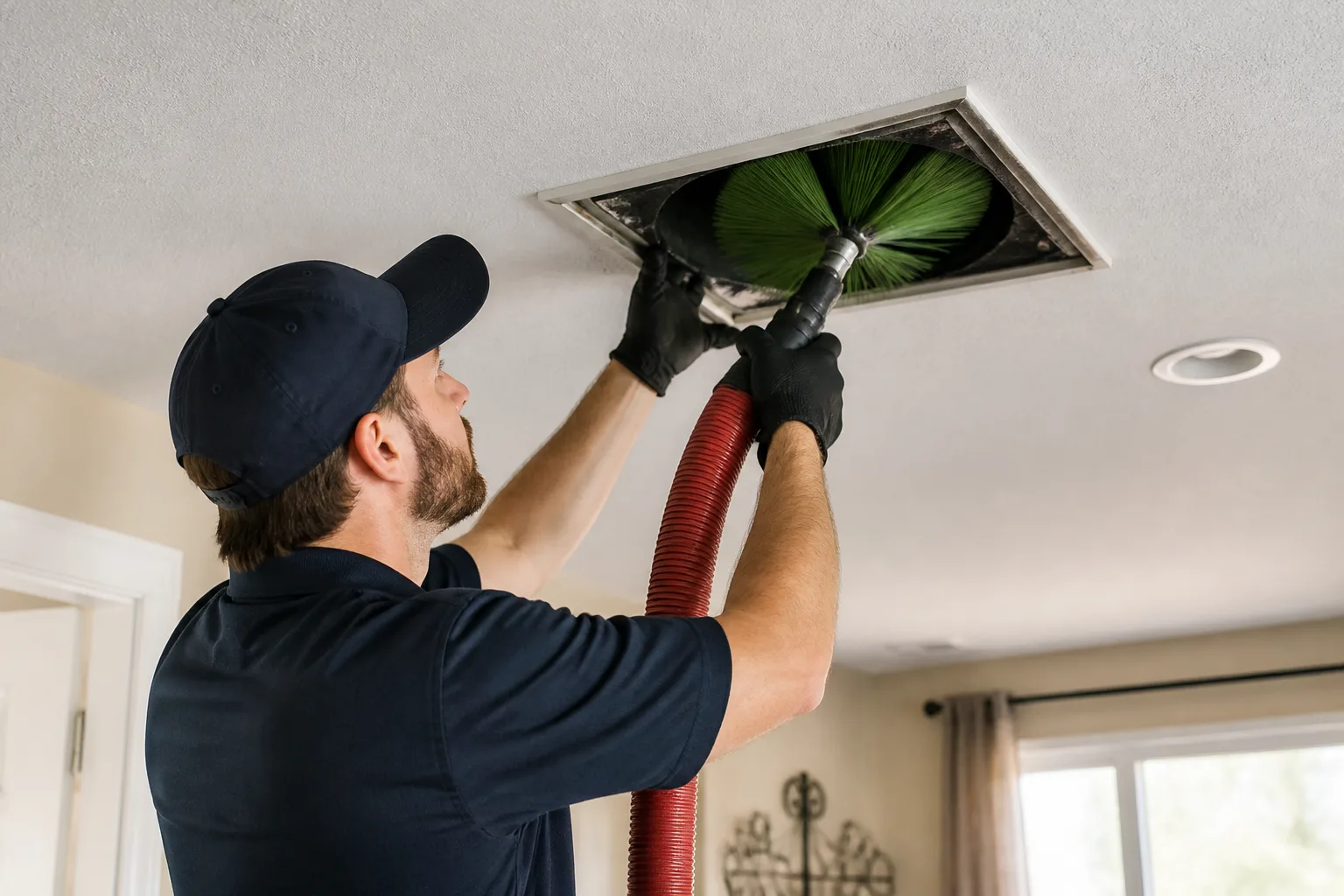
The equipment complements the rotary-brush side of the job. A Rotobrush system loosens the buildup; the Abatement unit captures it. One without the other is half a cleaning. In our experience around Lakewood, the homes that notice a real difference afterward are the ones where both ran together. If you want the full picture of what a proper cleaning involves, our air duct cleaning page walks through each stage.
When is HEPA filtration non-negotiable versus just good practice?
HEPA-filtered negative air is essential in some homes and simply wise in others. Knowing which camp you’re in helps you ask the right questions and avoid paying for equipment that doesn’t match your situation.
Non-negotiable in these cases:
- Post-mold remediation. After mold has been removed from a home, residual spores can sit in duct work. Cleaning without HEPA capture risks spreading them again.
- Occupied homes with immunocompromised residents. If someone in the household has a compromised immune system, a respiratory condition, or is recovering from illness, conservative filtration is the right call.
- Post-construction cleanouts. Drywall dust, sawdust, and silica settle deep into ducts after a renovation. That’s fine particulate that standard vacuums struggle to hold.
- Homes with known allergen sensitivity. Residents who react to dust and pollen often notice cleaner air after a HEPA-captured cleaning.
Beneficial but not critical: a routine maintenance cleaning in a healthy, occupied home with no mold history. HEPA capture still improves the process, but the stakes are lower. Lakerside neighborhoods with older housing stock, like parts of Eiber and Two Creeks, sometimes fall into the first category simply because of age and past water events. A technician should look at the system before deciding what’s needed in a Lakewood property.
How do technicians verify negative pressure is actually being maintained?
Verifying negative pressure means reading a pressure differential with a gauge or manometer during the cleaning, not guessing. A technician confirms that the pressure inside the duct system stays below the surrounding room pressure for the whole job. If it drifts toward zero or goes positive, contaminated air can escape, and the cleaning loses its purpose.
What a pressure reading tells you:
- A steady negative reading means air is still being pulled toward the HEPA unit.
- A reading that creeps toward zero can signal a leak in the containment, an open register, or a machine that’s undersized for the duct volume.
- Pressure is checked at setup and monitored as brushes and air whips move through the system, because opening up a run or disconnecting a section changes the picture.
You don’t need to read a gauge yourself, but you can ask whether one was used. A company that runs Abatement Technologies equipment correctly will have an answer, because the machine only does its job when the pressure is right. That’s part of the reason we treat duct work as a process, not a one-pass sweep. In Lakewood, where basements and crawl spaces often hide long, branching duct runs, containment has to be checked at several points rather than assumed.
What does proper containment look like before the machine runs?
Proper containment means sealing off every opening in the duct system so the only path for air is through the HEPA filtration unit. Before an Abatement Technologies machine is switched on, the register grilles are covered and taped, the furnace or air handler connection is sealed, and any disconnected duct section is capped. The system becomes a closed loop.
A good setup also includes:
- Floor protection and drop cloths around the working area.
- Sealing of return and supply registers so debris can’t exit into rooms.
- Isolation of the air handler so the blower isn’t running during the cleaning.
- Access cuts made and later sealed, so the whole run can be reached, not just the visible ends.
If the containment is rushed, the HEPA machine is doing good work but the duct is leaking around it. When we clean a system, we seal it first and test it, then clean, then re-seal any access points. You can see the difference on the equipment touchpoints at each register. If something looks loose or unsealed before the machine starts, that’s a conversation to have before work begins.
What questions should you ask a company claiming to use professional abatement equipment?
Ask directly, and listen for specific answers rather than a website slogan. Any company can list “professional-grade equipment” on a homepage. Confirming it’s actually on the truck, or in the room, is a fair question for a homeowner to raise.
Good questions to ask:
- Which Abatement Technologies model will be on site, and is it a negative-air or HEPA unit?
- Will you verify negative pressure with a gauge during the cleaning?
- How do you seal the registers and air handler before you start?
- Do you use rotary-brush equipment like Rotobrush alongside the HEPA capture?
- What does the written estimate cover, and will the price change once you’re inside?
A credible company answers these plainly. The ones that get vague about equipment or won’t commit to a flat price before the job starts are usually the ones to skip. We’ve seen Lakewood homeowners get burned by a low teaser rate that ballooned after the technician arrived, and the tell is almost always a refusal to put the scope and price in writing up front. One flat price per system, before work begins, is the standard worth holding a company to.
When should you call a pro instead of waiting?
Call a professional when you notice persistent musty odors near vents, visibly dusty registers that return within days of wiping, uneven airflow between rooms, or a recent renovation that sent dust through the house. Those are signs that the problem is inside the duct system, not at the filter. Mold history or a household member with respiratory sensitivity pushes the timeline up. For a system that pairs duct cleaning with furnace and coil work, our HVAC cleaning service covers that side. Dryer vents that haven’t been cleared are their own fire risk and worth a look too, which is where dryer vent cleaning comes in.
If a technician shows up with equipment that looks like a repurposed wet-dry vac and no pressure gauge, you’re allowed to say no thanks. No hard feelings on our end; better to ask than to pay for air that never really left the duct.
Related services in Lakewood
Abatement-level duct cleaning pairs naturally with HVAC cleaning and dryer vent work, so one visit can address the whole airflow picture. You can read more about who we are on the Lakewood Air Duct Cleaning Co home page.
The Bottom Line
Abatement Technologies equipment doesn’t just clean ducts; it changes how contamination is managed during the job. HEPA capture, verified negative pressure, and proper containment are what separate a real cleaning in Lakewood from a surface sweep. When you’re comparing companies, ask which units they bring, whether they read pressure during the work, and whether the price is set in writing before anything starts. Our technicians have up to 11 years of experience, and we use Rotobrush and Abatement Technologies equipment on the jobs where it counts. If you’re in Lakewood and need help, Lakewood Air Duct Cleaning Co offers free estimates. Call (877) 820-8391. We answer 24/7. Fast dispatch from 7am to 7pm, Sunday through Friday.
Frequently Asked Questions
It’s duct cleaning performed with Abatement Technologies negative-air and HEPA filtration equipment, which keeps the duct system under negative pressure so debris is captured rather than released into your home. It’s the same equipment standard used in professional remediation work. Call (877) 820-8391 for a free estimate if you want to know whether your Lakewood home needs it.
No. It’s essential after mold remediation, in homes with immunocompromised residents, and after construction cleanouts. For routine maintenance in a healthy home it’s beneficial but not mandatory. A technician should assess the system first. Call (877) 820-8391 to talk through your situation.
Ask which specific unit will be on site, whether negative pressure is checked with a gauge, and how containment is sealed before cleaning starts. A credible company answers with specifics. Ask for the written estimate up front so the scope is clear before work begins. Call (877) 820-8391 with your questions.
It can reduce the amount of settled debris and captured particulate in the duct system, which helps homes dealing with allergen sensitivity or a past mold issue. The cleaning removes the material; HEPA capture keeps it from recirculating. For a Lakewood property with these concerns, book an inspection first. Call (877) 820-8391. We answer 24/7. Fast dispatch from 7am to 7pm, Sunday through Friday.
Written by the team at Lakewood Air Duct Cleaning Co.
Need Air Duct Cleaning Help?
Call Lakewood Air Duct Cleaning Co - the local pro we connect you with is licensed and insured, here with fast help in Lakewood.
(877) 820-8391