
Emergency Air Duct Cleaning Near Me: What Lakewood Homeowners Should Do First
Most “emergency” duct situations in Lakewood don’t need a cleaning crew today. They need twenty minutes of diagnosis to figure out whether your ducts are the source of the problem or a victim of it. A burst pipe above a return plenum and smoke pulled through supply lines are both bad, but they’re different emergencies with different first steps. Get that distinction right and you’ll know who to call, how fast, and what to document before anyone touches a hose.
If you’d rather have someone walk through it with you, call (877) 820-8391. We answer 24/7.
Key Takeaways
- Water, smoke, and pest problems in ducts each call for a different response and often different equipment.
- Shut down the HVAC system before investigation if water, smoke residue, or rodent activity is involved.
- Photograph everything before any cleaning begins. Those photos support insurance and scope the job.
- Disturbing contaminated insulation or soot with the wrong equipment can undo remediation work.
- Ask any company what filtration and negative-air equipment they carry before you book “emergency” service.
Is it a containment problem or a contamination problem?
This is the question that sorts almost every duct emergency in Lakewood. A containment problem means something is getting into the ducts that shouldn’t be there right now: water from a failed supply line, attic moisture after a roof leak, vermin moving through a crawl space. A contamination problem means the ducts already hold the bad stuff: soot from a kitchen or electrical fire, mold growth from a long-standing leak, rodent droppings and nesting material. Containment is about stopping the source. Contamination is about safe removal. The two get handled differently.
Here’s how the categories usually break down:
- Water intrusion: usually containment. Find and stop the leak first. Ducts that stay wet grow problems, so drying matters more than cleaning at this stage.
- Fire and smoke: contamination. Soot settles on duct walls and insulation, and smoke odor travels every branch line. This is remediation work, not routine cleaning.
- Pest ingress: containment plus contamination. Droppings and nesting material need careful removal with HEPA filtration, and the entry point needs sealing or the problem returns.
- Sudden odor with no visible cause: often a drainage or moisture issue near the air handler. Diagnose before booking.
In our experience, homeowners who can name which category they’re in get faster, more accurate answers when they call, whether it’s us or another company in Lakewood.
When should you shut the HVAC system down first?
Shut the system off at the thermostat before you investigate if water is near the air handler, if there’s soot or smoke residue anywhere in the system, or if you’ve seen rodent activity around vents or the furnace. Running the blower in those conditions pushes moisture, soot, or droppings into every branch line it can reach.
The thermostat is the safe way to do this. Set the system to off, or switch the fan mode to off if that’s how your controls are laid out. Please don’t open the air handler cabinet, pull panels off the furnace, or reach near the blower yourself. There’s line voltage and moving parts inside, and that’s a job for a trained technician. If you can’t find the off setting or the system won’t respond, leave it and call (877) 820-8391. We answer 24/7. Fast dispatch from 7am to 7pm, Sunday through Friday.
Once the system is off, you’ve stopped the spread. That buys you time to document and plan instead of reacting.
What should you photograph before anyone arrives?
Document everything before a single vent is opened. Photos taken before cleaning are the difference between an insurance claim that moves and one that stalls, and they help any technician scope the job accurately instead of guessing.
- Each vent and register: close enough to show discoloration, dust patterns, or debris.
- Around the air handler and furnace: water staining, condensation, rust, or soot on the cabinet.
- Visible moisture: ceiling stains, baseboard swelling, or wet insulation near duct runs.
- Pest evidence: droppings, nesting material, gnaw marks, or entry points at exterior walls.
- The source of the emergency itself: the failed pipe, the fire area, the roof leak. Insurance wants the cause, not just the effect.
Add a short written note with dates and what you noticed first. If you’re in Lakewood and this goes to a claim, that record supports the scope far better than a phone call recollection a week later. Keep the photos on your phone until the work is done and paid.
Why can calling a general cleaning crew make a fire or flood worse?
Because disturbing contaminated material without the right equipment spreads it. A standard shop vacuum or a consumer-grade blower on a smoke-damaged or flood-soaked duct system can push soot and mold spores deeper into the home and into areas a remediator has already cleaned. That can void remediation work and force a do-over, sometimes at your expense.
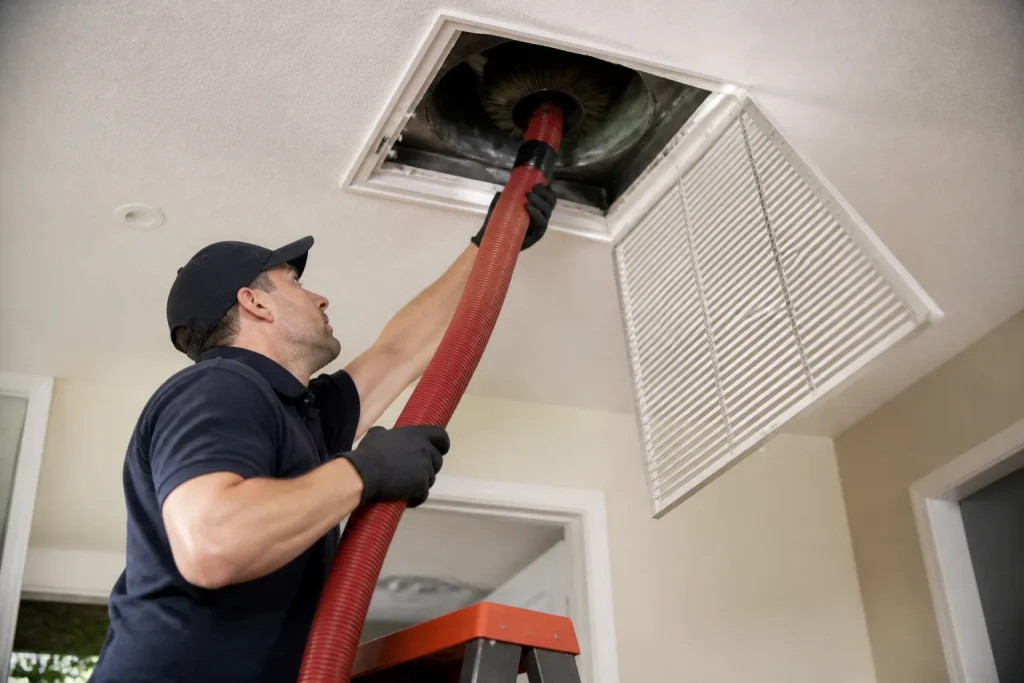
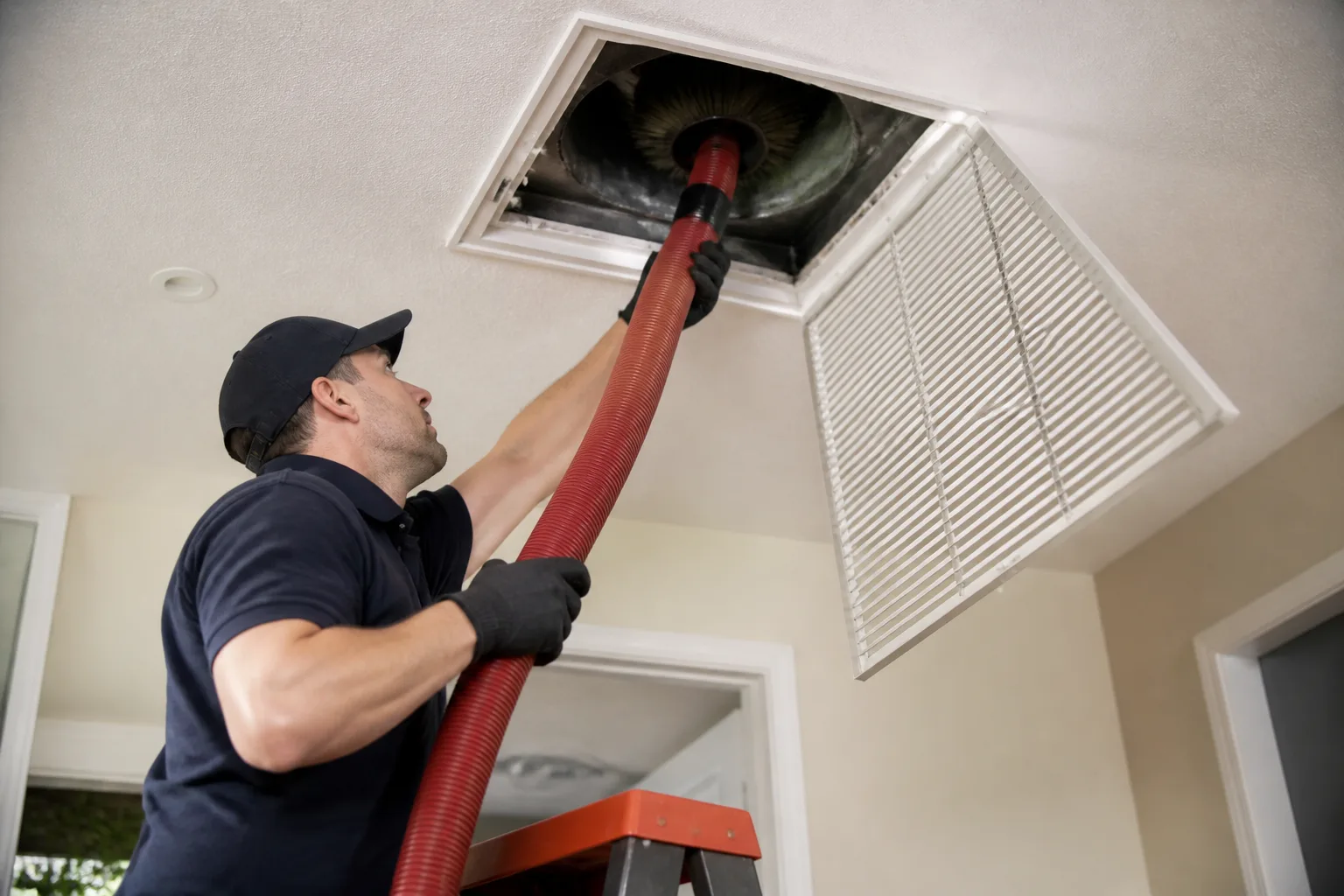
Fire and flood duct work calls for the same tools used in professional abatement: negative-air machines and HEPA filtration that capture contaminants instead of launching them into the room. That’s the standard we hold to. We use Abatement Technologies negative-air and HEPA equipment for exactly this reason, along with Rotobrush rotary-brush systems and Nikro high-capture units for the cleaning itself. It’s professional-grade equipment, not shop-vac shortcuts.
So when you call around Lakewood, ask what equipment the company carries for your specific situation. A crew set up for routine dust removal is not set up for smoke residue or rodent contamination. Nobody is served by pretending otherwise.
What questions should you ask before booking emergency duct service?
Ask them on the phone, before anyone is scheduled. A company set up for real remediation work answers these without hesitation, and the answers tell you whether they’re equipped for your actual situation.
- “Do you carry HEPA filtration and negative-air equipment?” If they can’t name their equipment, they’re probably not set up for contamination work.
- “How do you handle water intrusion versus smoke damage?” The answer should differ. If it doesn’t, keep calling.
- “Will you clean, repair, and seal, or just clean?” Cleaning around a gap or a failed joint means the problem comes back. Duct repair and sealing addresses the root cause instead of tidying around it.
- “What does the written estimate cover?” You want one flat price per system agreed before work starts, not a low teaser that grows once the equipment is inside.
- “Can I see before-and-after photos of my own ducts when you’re done?” That’s how you know the work was actually done.
If they dodge any of those, that’s your answer. Call (877) 820-8391 for an exact quote. Estimates are free, and we answer 24/7.
When is it actually worth calling a pro?
Call a pro when the ducts are wet, when there’s smoke or soot anywhere in the system, when you find pest evidence, or when the system is blowing musty air and you can’t find the source. Those are the cases where a cleaning crew with the wrong tools can make things worse. A pro with the right equipment, like the Rotobrush, Nikro, and Abatement Technologies gear we work with, handles the containment and the contamination in the right order.
Our technicians have up to 11 years of experience, and the local pro we connect you with is licensed and insured as their state requires. We offer one flat price per system, agreed before work starts, plus before-and-after photos. If you’d rather not DIY, call (877) 820-8391. We answer 24/7. Fast dispatch from 7am to 7pm, Sunday through Friday.
And a small confession: we’ve met more homeowners than we can count who did everything right during the emergency, then let the ducts sit wet for a week because they were too tired to call. We get it. The phone weighs a lot at that hour. The point is just to call eventually.
Related services in Lakewood: for routine work, air duct cleaning covers the full system, and dryer vent cleaning addresses one of the leading causes of residential fires from clogged lint buildup. If the emergency involved the air handler itself, HVAC cleaning is the starting point. For the rest, see Lakewood Air Duct Cleaning Co.
The Bottom Line
Most duct “emergencies” in Lakewood are really diagnosis problems. Figure out whether your ducts are the source or a victim, shut the system down if water, smoke, or pests are involved, and photograph everything before anyone opens a vent. Then ask any company what equipment they carry for your actual situation, because fire and flood work needs abatement-level filtration, not a shop vac. Knowing the difference between a containment problem and a contamination problem is what determines who you call and how fast.
If you’re in Lakewood and need help, Lakewood Air Duct Cleaning Co offers free estimates. Call (877) 820-8391. We answer 24/7. Fast dispatch from 7am to 7pm, Sunday through Friday.
Frequently Asked Questions
Pricing is set per job by a written estimate, and the final price depends on the scope, what caused the problem, and how much of the system is affected. We give one flat price per system agreed before work starts, with no per-vent pricing. Call (877) 820-8391 for an exact quote. Estimates are free.
Usually because they cover less: less time, less equipment, or a quick pass that doesn’t address the root cause. A low teaser number that grows once the equipment is inside is the standard bait-and-switch in this industry. Ask what’s included, ask about equipment, and ask for a written flat price per system. Call (877) 820-8391 and we’ll walk you through it.
Ask for before-and-after photos of your own ducts, not stock images. A company that photographed the system before cleaning can show you what came out and what it looks like after. That’s the honest proof, and it’s also what supports an insurance claim.
Most homes don’t need duct cleaning on a fixed schedule. It’s worth doing when you have a reason: visible dust blowing from vents, musty odor, pest activity, water intrusion, or recent fire or smoke damage. If none of those apply, you probably don’t need an emergency call at all. And if you’ve already had a problem, sealing the system afterward keeps recontamination from undoing the cleaning.
Written by the team at Lakewood Air Duct Cleaning Co.
Need Air Duct Cleaning Help?
Call Lakewood Air Duct Cleaning Co - the local pro we connect you with is licensed and insured, here with fast help in Lakewood.
(877) 820-8391